


While discussions about prenatal nutrition often spotlight mothers, emerging research points to the importance of fathers’ nutrition prior to conception and its potential long-term effects on their children’s health. A captivating area of study examines how omega-3 fish oil supplementation in fathers may positively influence the metabolic health of their offspring, especially seen in controlled studies involving mice. These discoveries are prompting a reevaluation of the connections between heredity, epigenetics, and the dietary influences that span generations.
The Significance of Paternal Nutrition
Historically, a father’s dietary choices were deemed to have minimal impact on the health of his future children beyond providing genetic material. However, advancements in the field of epigenetics reveal that paternal nutrition is much more involved. The dietary quality of a father may modify the biological properties of his sperm, resulting in alterations that can directly affect both early development and future health trajectories in their offspring.
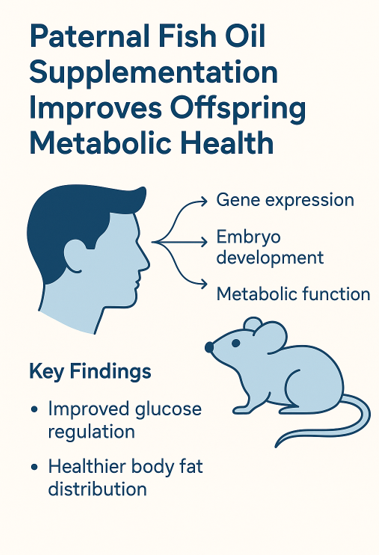
These diet-induced modifications in sperm can influence:
- Gene expression profiles – Nutrients can affect the activation and suppression of specific genes.
- Development of embryos – Early signals regarding growth are informed by molecular data within the father’s sperm.
- Metabolic functions over the long term – Initial changes can determine how offspring manage glucose, accumulate fat, and respond to inflammation.
Omega-3 fatty acids, particularly EPA and DHA, stand out as particularly impactful. These nutrients help mitigate inflammation, promote lipid metabolism, and facilitate essential cell communication, making them vital for enhancing metabolic conditions for future generations.
Key Insights: Benefits of Paternal Fish Oil Supplementation (Mouse Research)
Increasing evidence from mouse studies indicates that male mice consuming omega-3 fish oil prior to breeding produce offspring with markedly better metabolic health. Below are the most noteworthy findings compiled from several studies.
Enhanced Glucose Management in Offspring
Progeny from fathers who received fish oil supplements display improved glucose regulation from a young age. This encompasses greater glucose tolerance, decreased fasting glucose, and higher insulin sensitivity, all of which suggest a lower likelihood of developing metabolic issues, including prediabetes.
Optimal Body Fat Distribution
Research consistently shows more advantageous body composition in offspring of fish oil-supplemented fathers. Observed effects include diminished fat storage, a higher ratio of lean mass to fat, and decreased inflammation in metabolic tissues. Collectively, these attributes reflect a healthier metabolic framework and enhance the likelihood of better long-term health.
Improved Lipid Metabolism
Another critical benefit identified is the optimized handling of lipids. Offspring demonstrate increased lipid oxidation, refined triglyceride metabolism, and decreased indicators of dyslipidaemia. These outcomes align with the established metabolic roles of EPA and DHA, which aid in regulating fat processing and energy management.
Epigenetic Alterations in Sperm
One of the most important findings is that fish oil supplementation may lead to epigenetic reprogramming of sperm. Notable changes have been observed in DNA methylation patterns, miRNA expression, and chromatin arrangement. These adjustments affect how essential metabolic genes are activated or silenced during embryonic growth, laying the groundwork for healthier metabolic profiles.
Supportive Evidence from Related Rodent Studies
Several independent rodent studies reinforce these findings, showing similar advantages such as:
- Decreased inflammatory responses in offspring
- Improved liver metabolism
- Enhanced mitochondrial performance
- Lower likelihood of obesity-related symptoms when on a high-fat diet
- Such findings bolster the hypothesis that paternal Omega-3 intake fosters metabolic resilience across generations.
Mechanisms Behind Fish Oil’s Intergenerational Advantages
- Anti-inflammatory Properties – EPA and DHA diminish systemic inflammation in fathers, leading to enhanced sperm quality and epigenetic stability.
- Improved Sperm Membrane Structure – Omega-3s embed themselves in sperm membranes, boosting motility, structural integrity, and the molecular content delivered to the embryo.
- Epigenetic Modifications – Fish oil impacts the chemical markers governing gene expression. These epigenetic changes are transmitted during fertilization, influencing metabolic programming in offspring.
Implications for Human Health
While mouse model studies present compelling evidence, human biology is inherently more complex. Researchers warn that:
- These results cannot be directly extrapolated to humans just yet
- Human studies are essential to validate the extent of these effects
- Factors such as lifestyle, environmental impacts, and genetic variability are significant.
Nevertheless, these outcomes provide exciting possibilities for developing paternal supplementation strategies aimed at enhancing generational health.
- Focusing on paternal health: Men anticipating fatherhood could improve their Omega-3 levels.
- Regularity is critical: It takes approximately 74 days for EPA and DHA to be fully integrated into sperm.
- Quality matters: Opt for supplements that are high in EPA/DHA, with low oxidation levels and confirmed purity.
Further research is forthcoming: The “paternal programming” field is rapidly evolving and could shape future public health recommendations.
Current Research Insights and Limitations
Recent rodent studies further strengthen the premise that paternal Omega-3 consumption may influence offspring metabolic well-being. Notably, trials involving obese male mice treated with fish oil before reproduction have displayed better outcomes in their descendants, such as reduced body weight, enhanced insulin response, and a lower propensity for fatty liver conditions. These insights provide valuable information regarding how paternal nutrition may affect sperm epigenetic markers and multi-generational health. However, researchers remind us that animal models do not perfectly reflect human biology, and direct applications must be approached cautiously.
Limited Human Evidence to Date
Currently, there are no published randomized controlled trials (RCTs) or observational studies directly investigating the impact of paternal fish oil supplementation on the obesity risk of offspring or changes in epigenetic markers. Most human research on omega-3s concentrates on maternal intake during pregnancy or lactation, and findings relating to child growth, cognitive ability, or metabolic health yield mixed results. While broader research indicates that the father’s overall dietary quality and body weight can influence future generational metabolic risks, these correlations do not specifically isolate the effects of Omega-3 fatty acids.
Expert Opinion: Potential but Undeniably Unproven
Experts generally acknowledge that the animal-based evidence is strong enough to warrant further human studies—particularly those that monitor changes in fathers’ sperm quality and early metabolic markers in their children. However, ethical concerns and the long-duration required to examine intergenerational effects have impeded progress in this research area.
For now, recommendations regarding Omega-3 supplementation for males are primarily based on its recognized general health benefits, including cardiovascular advantages and inflammation reduction, rather than established improvements for future children. Anyone considering supplementation should seek advice from healthcare professionals for tailored recommendations.
Potential Relevance to Humans: Current Insights
While the discussion primarily centers on findings from mouse studies, it’s reasonable to question whether similar advantages might apply to humans. At this point, there is no conclusive scientific proof confirming that paternal fish oil supplementation positively affects human offspring’s metabolic health. Nonetheless, several indicators suggest a potentially viable link.
Reasons for Potential Human Impact
Human sperm quality is influenced by various factors such as diet, body weight, inflammation levels, and lifestyle choices.
Omega-3 fatty acids (EPA and DHA) are known to enhance sperm membrane fluidity, motility, and general sperm health—benefits well-documented within male fertility research.
Human epigenetic investigations have shown that male obesity, unhealthy diets, smoking habits, and nutrient deficits can alter sperm epigenetic markers, potentially affecting early embryonic growth.
As Omega-3s bolster anti-inflammatory pathways and cellular communication, scientists speculate they may similarly support healthier sperm epigenetics, akin to observations in animal studies.
Yet Evidence Remains Scarce
No human-based studies specifically assess whether paternal Omega-3 supplementation prior to conception influences the metabolic health of offspring or lowers the risk of obesity.
The complexity of human development, influenced by numerous additional factors—including environment, genetics, maternal health, and lifestyle—makes straightforward extrapolation from mouse data challenging.
Current Perspective
While the findings from mouse studies are optimistic and scientifically significant, experts stress the need for controlled human trials before presenting conclusive claims. At present, men are advised to consider Omega-3 supplementation mainly for its recognized health benefits—such as cardiovascular support, enhanced fertility, and lowered inflammation—rather than confirmed intergenerational advantages.
Conclusion
Paternal fish oil supplementation appears to be a promising avenue for influencing the metabolic health of future generations, at least within the context of studies on mice. Research indicates that omega-3 fatty acids can enhance sperm quality and epigenetic programming, aiding in establishing a more robust metabolic foundation in their offspring. Such revelations signify a shift in scientific understanding, expanding upon the notion that fathers contribute solely genetic material, highlighting a more dynamic role of paternal nutrition in early development.
While compelling data from animal studies presents exciting prospects for intergenerational health research, human evidence is still notably limited. No clinical trials have yet validated whether these metabolic advantages translate to human offspring when fathers supplement with omega-3s pre-conception. Further long-term investigations are essential to fully grasp the possible implications.
Currently, omega-3 supplements are highly endorsed for promoting men’s cardiovascular health, improving fertility, managing inflammation, and ensuring overall wellness. Any potential benefits for future generations, while intriguing, remain scientifically unverified. Nonetheless, this budding research emphasizes the importance of incorporating paternal nutrition into a comprehensive strategy for reproductive and familial health.