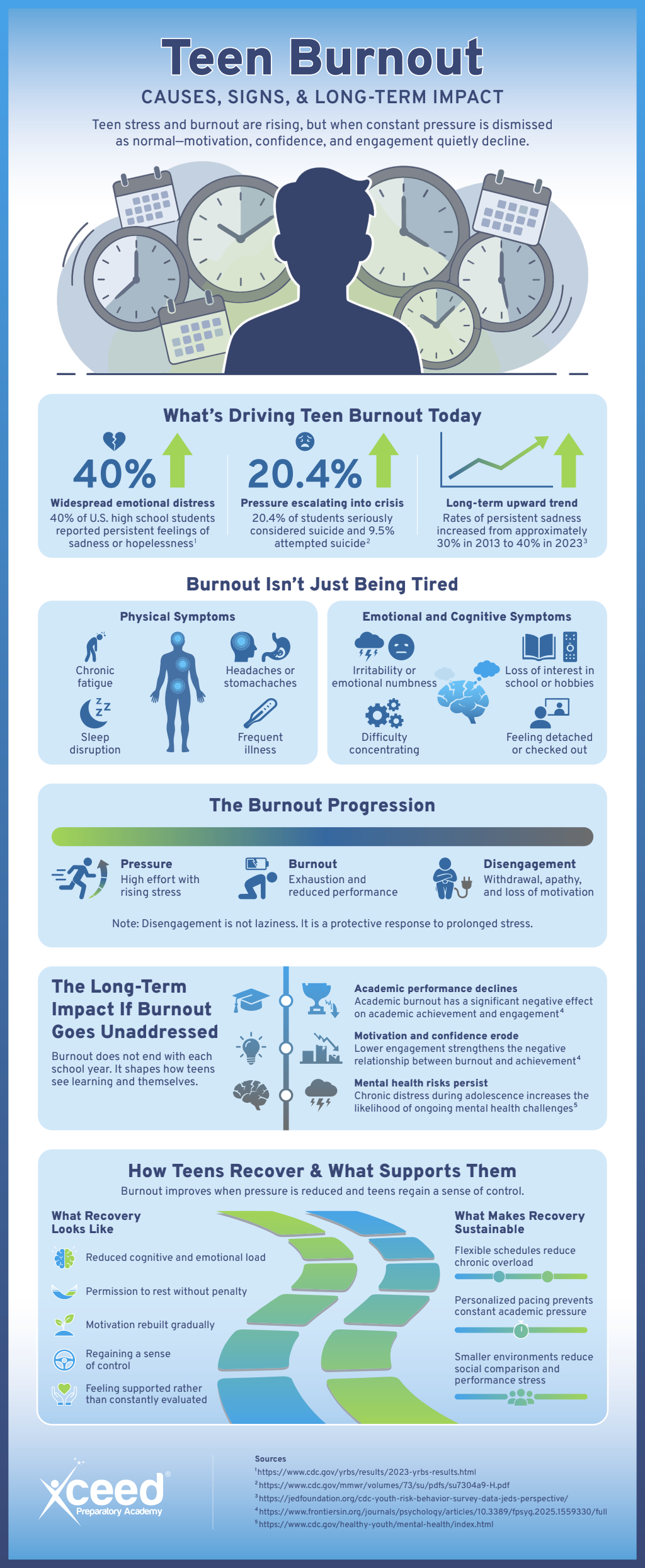
Teen burnout extends beyond the typical stress experienced prior to exams or significant events; it represents a state of continuous emotional, mental, and physical fatigue that arises from enduring pressure without sufficient recovery. Young people encounter academic challenges, social obligations, and future planning while their brains and bodies are still maturing. When these stresses remain persistent, the risk of burnout emerges, potentially affecting long-term health outcomes.
Primary Contributors to Teen Burnout
A major factor contributing to burnout is academic pressure. The burden of heavy assignments, advanced coursework, and the drive for high grades can lead to ongoing stress. Students, whether in public or private schooling systems, may experience fierce competition and worry about staying ahead.
Another element is overscheduling. Many teenagers transition directly from school to athletics, extracurricular activities, academic tutoring, or part-time employment, leaving little room for relaxation. Such crowded schedules diminish chances for rest and introspection, resulting in built-up stress.
Additionally, social pressures play a significant role. Social media can intensify feelings of comparison and performance anxiety. Many teens feel compelled to portray an idealized version of themselves while navigating peer relationships both online and in real life.
Even supportive family expectations can heighten stress levels. If a teenager believes that their achievements are tied to parental approval or love, they might push themselves beyond healthy boundaries. Over time, this relentless pursuit can sap their motivation and enjoyment.
Initial Indicators of Burnout
The onset of burnout is typically gradual. One of the earliest indicators is emotional exhaustion. Teens may show signs of irritability, despair, or a belief that their efforts are futile. Hobbies that once provided joy may now seem devoid of purpose.
Physical symptoms are also prevalent. Common issues can include recurrent headaches, gastrointestinal discomfort, and shifts in sleep behavior. Some adolescents may find it difficult to fall asleep due to racing thoughts, while others may sleep significantly but still feel fatigued.
Cognitive impacts may emerge subsequently. Struggles with focus, forgetfulness, and a decline in academic performance can be manifestations of cognitive overload rather than a lack of capability. Additionally, withdrawing from friends or family members is another indicator of dwindling emotional resources.
Potential Long-Term Effects on Health and Development
If left unaddressed, burnout can profoundly influence a teenager’s mental health trajectory. Ongoing stress during the formative years has been associated with a heightened likelihood of developing anxiety and depressive disorders in early adulthood. When the stress response system is chronically activated, it can disrupt mood regulation and resilience.
Moreover, motivation may decline. Adolescents who equate effort with fatigue may become disengaged from their educational pursuits or future aspirations. This pattern can persist into tertiary education and the workforce, obstructing personal development and satisfaction.
There are also potential implications for physical health. Chronic stress can interfere with sleep patterns, diminish immune function, and lead to unhealthy coping mechanisms such as emotional eating or substance misuse. These tendencies can continue into adulthood and affect long-term health outcomes.
Teen burnout indicates a misalignment between pressures and the necessary time for recovery. Timely identification enables families, educators, and healthcare providers to make adjustments to schedules, provide emotional support, and set pragmatic expectations. Promoting regular sleep, physical activity, and open lines of communication can help reestablish balance. Tackling burnout during adolescence fosters improved mental health, healthier coping mechanisms, and enhanced long-term well-being.
For further details on teen burnout, consider reviewing the resource provided below.