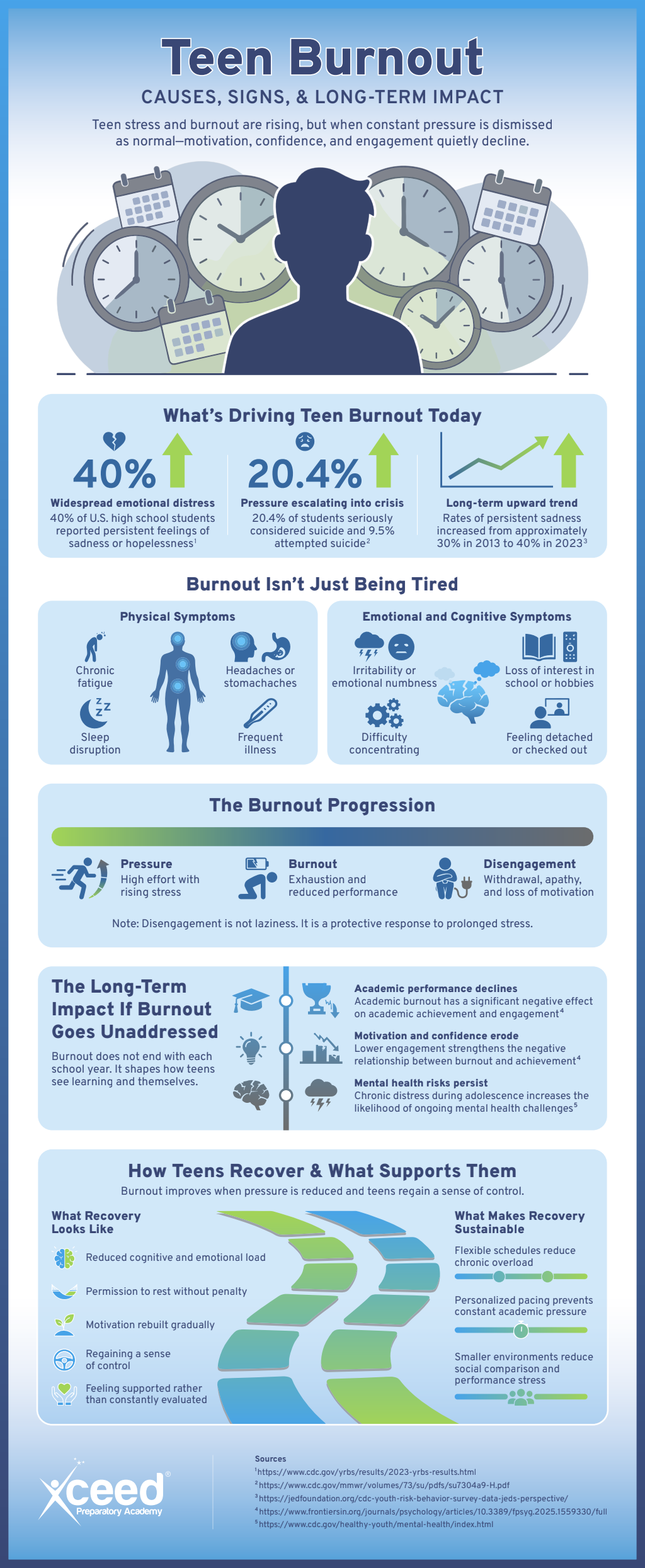
Teen burnout goes beyond temporary stress experienced before an exam or significant event. It signifies a continuous state of emotional, mental, and physical fatigue resulting from sustained pressures without adequate rest. During this stage of development, adolescents grapple with academic demands, social pressures, and plans for the future, all while their minds and bodies are still maturing. When these stresses become persistent, they can lead to burnout, which may have severe implications for lasting health.
Key Contributors to Teen Burnout
One of the main factors contributing to burnout is the overwhelming academic workload. High demands from assignments, advanced courses, and the quest for top grades can generate long-lasting stress levels. Students in both public and private educational settings often experience intense rivalry and fear of lagging behind their peers.
Another major factor is overscheduling. Many teens transition swiftly from school to sports, clubs, tutoring, or part-time jobs, leaving them with minimal time to unwind. Busy schedules create fewer opportunities for rest and introspection. When regular breaks are scarce, accumulated stress can escalate.
Social pressures also play a significant role. The influence of social media can heighten feelings of comparison and anxiety regarding performance. Teens might feel compelled to maintain a flawless persona while navigating peer relationships in both digital and real-life contexts.
Even well-meaning family expectations can contribute to this stress. A teen who believes that love or approval hinges on their achievements may end up pushing themselves too hard. Over time, this relentless drive can sap motivation and joy from their experiences.
Initial Indicators of Burnout
Burnout typically emerges slowly. One of the earliest indicators is emotional exhaustion. Teens may exhibit irritability, feelings of hopelessness, or the belief that their efforts are futile. Activities once enjoyed may start to feel pointless.
Physical signs can also surface, including persistent headaches, stomach issues, and alterations in sleeping habits. Some young people may find it hard to fall asleep due to overactive thoughts, while others may experience excessive sleep and still feel fatigued.
Cognitive changes can occur as well. Struggles with concentration, forgetfulness, and dropping grades often reflect mental overload rather than a lack of capability. Withdrawal from friends or family members is another indicator that emotional reserves are running low.
Long-Term Effects on Health and Development
If left unaddressed, burnout can influence a teenager’s mental health trajectory. Ongoing stress throughout adolescence is associated with a greater likelihood of anxiety and depression in young adulthood. An activated stress response system over extended periods can disrupt mood regulation and resilience.
Motivation can also take a hit. Teens who equate effort with exhaustion may become disengaged from their studies or future ambitions. This mindset can persist into their college years or careers, stunting personal growth and satisfaction.
There are potential physical health implications too. Chronic stress can interfere with sleep patterns, weaken the immune system, and trigger unhealthy coping strategies, such as overeating or substance abuse. These behaviors can carry on into adulthood and shape health outcomes.
Teen burnout is an indication of a mismatch between demands and the necessary recovery time. Early identification enables families, educators, and health professionals to respond effectively through schedule modifications, emotional support, and realistic expectations. Promoting regular sleep, physical activity, and open channels of communication can aid in restoring balance. Tackling burnout during the teenage years can foster healthier mental states, improved coping strategies, and enhance long-term wellness.
For additional insights on teen burnout, please refer to the resource linked below.