


A woman receives confirmation that her mammogram results are normal, sparing her from the anxiety of additional callbacks or follow-up procedures. However, she is aware of her dense breast tissue, and this single detail continues to weigh on her mind. The letter indicating a clean bill of health doesn’t provide the peace of mind she had hoped for.
In the space between the reassuring result and her lingering concern, there exists a gap that many women experience. For countless others, incorporating an ultrasound specifically for dense breast tissue into their regular screening schedule is the key to bridging that divide.
Challenges of Mammography
Both dense breast tissue and tumors present a common challenge on mammograms: they both appear white. This imaging issue is one radiologists have faced for years and is not dependent on either outdated equipment or inferior-quality scans. The physics of imaging makes distinguishing these tissues difficult.
Many women are surprised to discover that almost 50% have dense breasts. Unlike fatty tissue, breast density cannot be detected through self-examination; it is identified by a radiologist during the mammogram interpretation, leading some women to learn about their density status afterward.
Women with dense breast tissue are also at a significantly increased risk, being 4 to 6 times more likely to develop breast cancer. Utilizing supplemental breast ultrasound, such as the 3D system offered by SOFIA, enhances detection through dense tissue where mammography may fall short. This advancement enables earlier and more reliable identification rather than depending on chance.
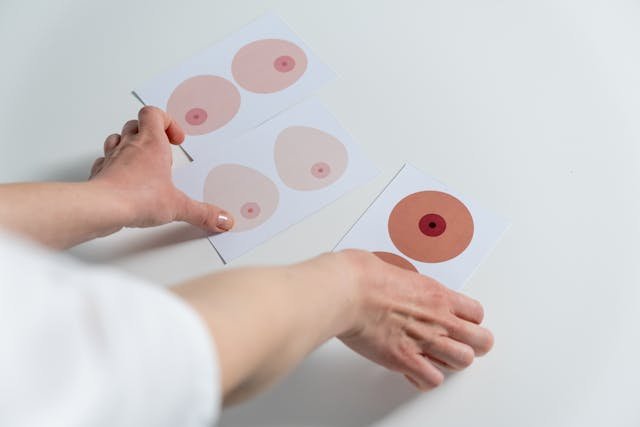
The structure of dense breast tissue comprises more fibrous and glandular elements than fat. Although density itself does not trigger cancer, the concern arises from ‘masking’ – where tumors are obscured by surrounding tissue that appears similar on X-rays. Understanding your breast density classification (from A to D) provides a concrete point of discussion with your healthcare provider, replacing nagging uncertainties with actionable information.
The Role of Ultrasound
Unlike X-rays, ultrasound employs sound waves, offering an alternative approach that navigates dense tissue more effectively. This distinction is crucial. While a mammogram may present a blur of white, ultrasound can clearly differentiate between a fluid-filled cyst and a solid mass.
Research indicates that additional cancers are detected in 3 to 4 per 1,000 women screened when using supplemental ultrasound alongside mammography. This statistic is particularly relevant for those who assume that annual mammograms alone are sufficient for their health.
The ultrasound process itself is real-time and customizable, enabling technicians to adjust angles, apply varying pressure, and focus on particular areas during the examination. Additionally, it involves no radiation exposure, a critical consideration for women mindful of cumulative imaging effects over the decades of screening.
Identifying Those Who Gain the Most
Not every woman requires a supplemental ultrasound, but certain groups stand to gain the most:
- Women who have formally been informed of having dense breast tissue in their mammogram results.
- Those with a personal or family history of breast cancer, even without a known genetic mutation.
- Younger women in their 30s proactively engaging in a screening strategy before the typical starting age.
- Women who have undergone breast surgeries or biopsies, as scar tissue can obscure mammogram interpretations.
Women facing unexplained breast pain and significant anxiety stemming from ambiguous mammogram results also merit consideration. An ultrasound following years of ‘we’d like to take another look’ communications can act as both a means of clarification and a detection tool. Reducing diagnostic uncertainty serves a vital psychological function.
Incorporating It Into Your Healthcare Routine
Ultrasound is intended to complement mammography, not replace it. The most efficient strategy is to book both tests during the same visit or within the same week to minimize the number of appointments.
A prevalent myth is that a referral from a specialist is necessary to request supplemental screening. In reality, a general practitioner or OB-GYN can authorize a dense breast ultrasound. If this topic hasn’t been addressed during your visits, feel free to ask outright. Being aware of your density classification can help frame this conversation during your next appointment, giving providers a clearer understanding of your specific needs.
Some imaging facilities now offer bundled packages that include both 3D mammography and ultrasound for women with dense breast tissue. It’s advisable to check if your preferred imaging center provides such options.
Understanding the Financial Aspects
The coverage for supplemental ultrasound specifically for dense breasts varies significantly, so it’s important to gather this information beforehand. In certain U.S. states, insurance plans like Medicare are required to cover breast ultrasounds for women identified with dense breast tissue. In contrast, in other regions, they may be classified as diagnostic rather than screening ultrasounds, which has implications for reimbursement.
Before assuming that this service is financially out of reach, contact your insurer to inquire how they categorize supplemental ultrasounds for patients with dense breasts. Additionally, check with your imaging center for self-pay rates, as many facilities offer more budget-friendly options than expected for cash-paying patients.
Legislative changes in this sector continue to move toward greater inclusivity of insurance coverage. Staying updated allows you to advocate effectively for the completeness of your screening plan.
Achieving Greater Clarity
The woman from the initial scenario, who initially felt uneasy despite her clear mammogram results, can change that narrative. By pairing her mammogram with a dense breast ultrasound, she provides her radiologist with more information, enhancing her sense of security.
Taking control of one’s health involves constructing a complete understanding rather than waiting for issues to arise. Begin by determining your breast density category at your next appointment—this single inquiry could significantly influence your healthcare journey.