

For centuries, women across the globe have longed for beauty—even to the point of endangering their lives. In the Renaissance period and Victorian England, it was common for women to use extracts from deadly nightshade—a plant capable of causing paralysis or even death—to whiten their skin and enlarge their pupils for that alluring, innocent look, often leading to visual impairments or blindness. During the 1700s, members of royalty and elite society donned foundation containing lead, which sometimes resulted in lead poisoning. Additionally, in the 1930s in the United States, sixteen women were seriously harmed or blinded by Lash Lure, an eyelash dye made from paraphenylenediamine— a toxic chemical still present in some hair dyes today.
While these accounts may seem startling, little has changed in contemporary times. We continue to use various cosmetics and personal care products that can be detrimental to our health, increasing the risk of conditions ranging from cancer to autoimmune diseases, disrupting hormonal balance and immune function, heightening vulnerability to allergies, and even leading to premature mortality. However, there has been significant growth in “clean” beauty and personal care alternatives aimed at constructing a non-toxic makeup routine, with retailers like Sephora establishing standards and certifications for products made with fewer synthetic ingredients. The challenge remains that there are no universally accepted guidelines or regulations for “clean” cosmetics, meaning that what one brand or retailer deems safe might not align with definitions of safety from others. My journey has provided me with valuable insights that can assist you in making informed choices while still adhering to your desired aesthetic.
I was surprised to discover that most of the products I was applying to my face, hair, skin, and nails were laced with harmful ingredients. Many of these substances disrupt hormonal regulation, impair immunity, and lead to numerous health issues. Essentially, I was subjecting myself to a cocktail of chemicals daily in the name of hygiene and beauty. However, I didn’t discard everything at once on my journey toward a cleaner beauty routine. I approached it gradually, focusing first on the more obvious products—those I used regularly in the shower. I replaced my standard soap, shampoo, and conditioner with alternatives that received a rating of 1 on the Environmental Working Group’s Skin Deep database (visit www.ewg.org/skindeep/). This public database evaluates more than 96,000 products based on safety, ranking them from 1 to 10, where 10 signifies the most hazardous options.
Next, I shifted my attention to what I used most frequently on the largest area of my body: my moisturizer. This shift was essential for me, and although the first all-natural moisturizers lacked the pleasant scents I was used to, I’m thankful for abandoning chemical-laden products that I applied to my skin, the body’s largest organ. In fact, the skin absorbs substances so effectively that topical medications often serve as the most efficient way to deliver medicine into our systems.
However, not every transition went smoothly. Upon trying a nontoxic face moisturizer from one brand, I experienced breakouts, which took several days to resolve as my body expelled the product’s natural ingredients. The takeaway? Clean products might not always be compatible with your skin or hair, which is a common issue with conventional items made from synthetic (and potentially irritating) substances.
What may seem like sacrifices can turn out to be beneficial for both your health and aesthetics. For instance, when I initially switched to a clean shampoo, my hair appeared oily, even when freshly washed. But after a few weeks, my scalp adjusted to produce less oil, allowing me to wash my hair less often while achieving softer, healthier locks. It also took considerable time to find a clean mascara that I liked; in the meantime, I simply reduced how often I used my regular mascara. Thus, limiting your exposure can also involve changing your habits to reduce contact with toxins.
Essential Insights on Choosing Clean Personal Care Products
Less is more
You probably don’t need as many products as you currently use. Reducing the number of items in your routine is the simplest way to diminish your toxic exposure. Fewer chemicals applied to your body, face, hair, and nails contribute to their overall health, resulting in a more radiant and nourished appearance.
Trial and error are key
If the natural deodorant or toothpaste you tried in the past didn’t meet your expectations, it is worth experimenting with newer options available today that are safer, more effective, and have improved scents. Clean personal care products can vary widely, so it’s essential to test different brands and formulations until you find what works for you.
Don’t let perfect be the enemy of good
There’s no rule that dictates you must convert every product to a clean version immediately. Use as many clean items as possible, but remember it’s perfectly acceptable to choose to continue with certain conventional products you feel comfortable with.
Go slow
I didn’t discard all of my toiletry and makeup products the moment I decided to revamp my personal care routine. Begin by swapping one or two items, and as you deplete products, transition to cleaner alternatives.
Prioritize what you use most often
Maximize your efforts by changing products that you apply daily in larger amounts, such as soap, body lotion, shampoo, toothpaste, and sunscreen. If you are a woman, consider switching to a nontoxic deodorant and organic menstrual products, as conventional varieties may elevate cancer risks.
Effective DIY Deodorant Recipe
- 2½ teaspoons unrefined coconut oil
- 2½ teaspoons unrefined shea butter
- 2 teaspoons baking soda
- ½ cup arrowroot powder
- 6 drops lavender or orange essential oil
- 6 drops grapefruit essential oil
- 2 drops tea tree oil
To prepare, combine coconut oil and shea butter in a glass bowl or jar, then place that jar in a saucepan filled with water. Heat the water over medium until it boils, melting the oils. Stir in the baking soda, arrowroot powder, and essential oils. After mixing, pour the concoction into a small glass jar with a lid and let it cool at room temperature. Once cooled, cover and store in a cool, dry area. Apply with your fingertips.
Author Bio

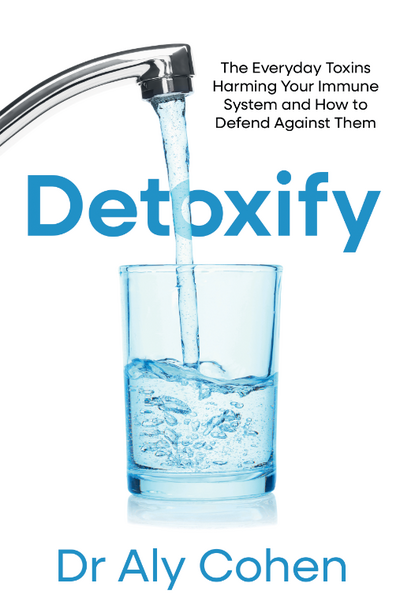
Dr. Aly Cohen is a board-certified rheumatologist and integrative medicine practitioner, celebrated nationally for her knowledge in environmental health and medical education. She authored DETOXIFY: The Everyday Toxins Harming Your Immune System and How to Defend Against Them, linking everyday chemicals to the rising prevalence of immune disorders and autoimmune diseases, offering practical actionable solutions. In addition, she continues to teach, lecture, and practice in Princeton, New Jersey.