

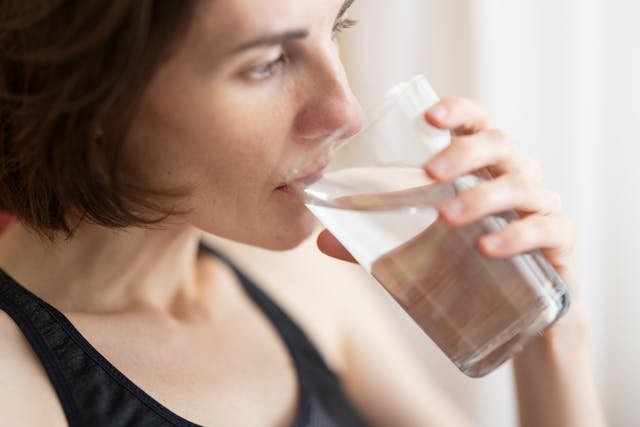
You likely already consider your dietary choices, paying attention to labels, opting for whole foods instead of processed items, and striving to make healthy decisions. However, there’s an important consideration many of us overlook: the quality of the water we consume daily.
Microplastics have been detected in various sources, including tap water, bottled beverages, and even the air we inhale. The more studies are conducted, the more pervasive these particles seem to be. The pressing issue now revolves not around their presence, but how to manage their impact.
Understanding Microplastics
Microplastics are minuscule plastic fragments measuring less than 5 millimeters. While some can be spotted with the naked eye, many remain invisible. The smallest variants, known as nanoplastics, are measured in microns and easily bypass most conventional water treatment processes.
These particles originate from unexpected sources:
- Deterioration of plastic bottles and packaging over time
- Fibrils from synthetic textiles released during washing
- Plastic piping in homes leaching particles into water
- Outdated municipal treatment facilities that lack the capability to filter them
Once they infiltrate the water supply, they predominantly remain there.
Why You Should Be Concerned
Herein lies a surprising fact: most water utilities are not mandated to conduct tests for microplastics. Consequently, your yearly water quality report, which details contaminants and their concentrations, likely lacks any information regarding microplastics. This absence is not a sign of safety, but rather a significant measurement gap.
Independent testing through fluorescence microscopy by Quality Water Lab has demonstrated that microplastic particles above 10 microns were rendered non-detectable after passing through certified reverse osmosis systems, marking one of the few independent studies verifying how different filters perform against these particles.
Initial studies have indicated potential health concerns linked to microplastic exposure, including:
- Body inflammation
- Disruption of hormonal functions
- Increased oxidative stress
Notably, these particles do not decompose within the human body; they build up over time. Currently, no enforceable regulations exist for microplastic levels in drinking water in the United States or the United Kingdom.
Challenges with Many Water Filters
Many filters claim to remove various contaminants, yet very few provide specific data regarding plastic particles. The disparity between a filter that is effective against microplastics and one that is not is often underestimated.
The crucial factor lies in the micron rating. A filter rated over 5 microns won’t capture the smaller plastic particles, as they were never intended to. Filters that show proven reduction typically possess fine filtration media rated at 1 micron or lower and provide verified third-party lab results as opposed to vague claims.
Effective Filter Types for Microplastics
| Filter Type | Effective for Microplastics | Notes |
|---|---|---|
| Reverse osmosis | Yes | Removes particles down to 0.0001 microns |
| Submicron carbon block | Yes | Effective if rated at 0.5 microns or below |
| Ultrafiltration | Mostly | Good for certain particles, but not all chemicals |
| Standard pitcher filter | No | Pore size is too large |
| Basic faucet filter | Rarely | Not specifically designed for plastic particles |
| Sediment filter above 5 microns | No | Only captures visible debris |
Reverse osmosis systems are the most effective solution available, with under-sink versions easily installed beneath the kitchen sink and countertop options that require no plumbing, making them ideal for renters or those avoiding installation difficulties.
Submicron carbon block filters offer significant reduction at a more accessible price and without the complexity associated with full reverse osmosis setups. They maintain consistent water pressure and are simple to install.
Steps You Can Take
To lessen your exposure to microplastics, consider taking the following practical measures before purchasing any filters:
- Review your local utility’s annual water quality report. This document addresses regulated contaminants and is freely accessible to the public.
- Inspect the micron rating of any existing filter you have. If it exceeds 1 micron, it probably isn’t effective against microplastics.
- When selecting a new filter, seek NSF/ANSI 401 certification, which includes emerging contaminants like microplastics, as well as third-party testing results.
Research on microplastics is continually evolving, but trends are becoming clear. These particles exist in drinking water at discernible levels, accumulate in human bodies, and the long-term implications remain under investigation. Utilizing a verified filter is currently the most effective and economical way to minimize your daily exposure without making major lifestyle shifts.
Sometimes, the simplest changes can lead to the most significant improvements.