

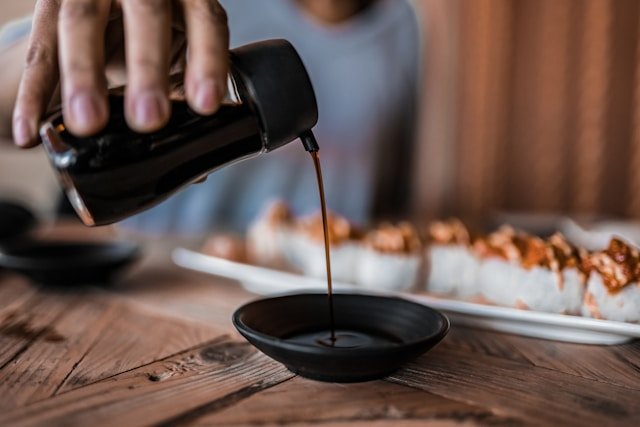
Soy sauce, commonly seen as a supplementary ingredient, holds significant importance in a professional kitchen, enhancing the harmony of various dishes. In large-scale cooking, even minor variations can impact the end product. Therefore, choosing the right bulk soy sauce necessitates thorough assessment and a strong grasp of quality. We consulted with Takashi Sato, president of SAN-J, to bring you this detailed guide on picking a professional-grade soy sauce that ensures consistent performance, balanced flavors, and meets the rigorous demands of a busy culinary environment.
The Significance of Quality in Bulk Soy Sauce
In a professional setting, ingredients must deliver reliable results consistently. Soy sauce is frequently incorporated into multiple recipes and often in large amounts, making any imbalance immediately perceptible. An overly salty soy sauce can dominate a dish, while one lacking depth may leave flavors feeling flat. Moreover, varying its quantity can alter the overall taste profile dramatically.
Quality soy sauce adds value beyond basic seasoning; it enriches a dish’s structure by infusing umami, balancing flavors, and enhancing other components without overwhelming them. When appropriately selected, it serves as a steady foundation rather than a variable that constantly needs adjustments.
The Brewing Process Explained
The brewing method is a critical determinant of soy sauce quality. Traditionally brewed soy sauce undergoes fermentation over several months, allowing proteins to decompose and creating a complex and nuanced flavor profile.
On the other hand, chemically manufactured soy sauces are produced through expedited methods that prioritize speed over flavor complexity. While this approach increases production volume, it often results in a product with less appealing taste and aroma. Opting for naturally brewed soy sauce is typically the best assurance of quality, richness, and versatility.
Identifying Quality and Authenticity in Ingredients
A quality soy sauce is characterized by a straightforward ingredient list, predominantly consisting of soybeans, wheat, water, salt, and a fermentation starter. This simplicity indicates a reliance on time and fermentation for flavor development rather than artificial additives.
The presence of artificial flavor enhancers or excessive preservatives may signal attempts to standardize flavors or compensate for inconsistencies. While these may appear similar to the untrained eye, they often lead to unpredictable results in a professional kitchen.
Flavor Assessment in Real-World Applications
Tasting soy sauce alone offers an initial impression but doesn’t fully represent its utility. Understanding its performance across various applications is vital in a professional environment. This includes ensuring consistent behavior during cooking, seamlessly blending into sauces, and producing reliable outcomes from one batch to another.
An ideally balanced soy sauce should present moderate saltiness, gradually revealing umami notes. There should be a slight roundness to the flavor that smooths its edges, complemented by a clean finish that doesn’t linger unpleasantly. Any harsh or metallic aftertastes generally indicate inferior production techniques.
Conducting tests in actual kitchen scenarios is crucial. The soy sauce must maintain its quality when heated, reduced, or mixed with other ingredients. Consistency is essential in high-volume settings where recipes are frequently repeated; variations in flavor or intensity can lead to discernible differences in the final dishes, impacting both quality control and customer satisfaction. Chefs prefer transparency in recipe modifications rather than unexpected changes, making the choice of a dependable soy sauce vital.
The Role of Aroma and Appearance
A visual examination and aromatic assessment provide valuable insights into a soy sauce’s quality even before tasting. A well-crafted soy sauce typically exhibits a rich reddish-brown hue, indicative of proper fermentation and aging. If the liquid appears excessively dark or cloudy, it may suggest the inclusion of artificial coloring rather than natural maturation.
The aroma should be warm and subtly complex, hinting at fermentation and a slight sweetness. Sharp or chemical scents often signify production shortcuts. Though minor, these details can reliably forecast how the product will behave in cooked dishes.
Practical Aspects for Bulk Soy Sauce Usage
Effective storage, handling, and packaging are crucial in maintaining the consistency of bulk soy sauce over time. In a dynamic professional kitchen, these factors can enhance efficiency, minimize waste, and preserve the product’s quality from the first use to the last. Some important considerations include:
- Containers should reduce air and light exposure to avoid oxidation.
- Packaging must be robust enough to withstand frequent handling.
- Pouring mechanisms should facilitate precision and control during service.
- Storage solutions should ensure cleanliness and limit contamination risks.
Enhance Your Culinary Operations with SAN-J
SAN-J is committed to quality, consistency, and tradition in soy sauce production. Their fermentation methods allow flavors to mature naturally over time, avoiding shortcuts that compromise quality. This approach results in a soy sauce with depth, balance, and a clean finish, ideal for the demands of professional kitchens. “For eight generations, my family has meticulously worked to perfect the authentic flavor of real soy sauce, infusing over 200 years of unwavering dedication into every bottle,” Sato states.
SAN-J takes great care with their ingredients, ensuring each batch provides a consistent flavor profile through simple and controlled formulations. This reliability is crucial for chefs and operators who require predictability in high-volume service and diverse applications.
Additionally, SAN-J offers options such as gluten-free soy sauces, certified by the Gluten-Free Certification Organization. These alternatives maintain the same flavor complexity and performance as standard varieties, catering to kitchens and individuals with specific dietary requirements. Their mission is to deliver solutions that meet culinary standards while respecting dietary considerations without compromising quality.
Consistency is Key
Ultimately, quality soy sauce serves a subtle but essential role, enhancing flavors, balancing dishes, and tying everything together without drawing attention to itself. This is precisely why its selection is crucial. Taking the time to evaluate bulk soy sauce thoroughly ensures the consistency of your kitchen operations. Over time, this reliability translates into a strong reputation.
Frequently Asked Questions
How can I determine if soy sauce is naturally brewed?
Look for labels that state “naturally brewed” or “traditionally fermented.” The ingredient list should be straightforward, and the flavor should exhibit more complexity and balance compared to chemically produced variants.
Does a darker soy sauce indicate superior quality?
Not necessarily. A very dark color can sometimes signify artificial coloring. High-quality soy sauces are generally characterized by a rich reddish-brown shade, indicative of proper fermentation rather than artificial enhancement.
Is gluten-free soy sauce appropriate for all recipes?
Generally, yes. High-quality gluten-free soy sauces are crafted to provide similar depth and balance, making them effective substitutes in various cooking and finishing applications.
Why does the flavor of soy sauce change during cooking?
Cooking can intensify flavors and shift the balance of saltiness and umami. A well-crafted soy sauce will retain its integrity throughout the cooking process, while lesser-quality options may become harsh or lose their complexity.